
Scope notes: what these easy landscaping ideas can and cannot promise
Before planning anything, it helps to be clear about the scope of these low maintenance backyard ideas, because outdoor spaces are influenced by climate, local regulations, soil conditions and the particular mix of sun and shade around your home, and generic advice will always benefit from a small adjustment to your specific region.
What this guide is designed to help with
- Offer simple, easy landscaping structures that reduce mowing, watering and frequent pruning, without requiring specialized tools or a large budget.
- Suggest a region-neutral plant palette in broad categories (such as drought tolerant shrubs, groundcovers and shade plants) that you can match to local species or varieties recommended by nearby garden centers or extension services.
- Provide visual layout ideas and seasonal maintenance calendars that give you a starting point for planning work across the year instead of reacting only when the yard feels out of control.
- Highlight basic horticulture and fabric care–style principles for plants and materials, such as why mulch helps with water savings, why root-free zones should stay clear around tree trunks, and why heavy pruning at the wrong time of year can stress certain species.
What this guide cannot guarantee or replace
- It cannot substitute for local professional advice about tree safety, drainage, retaining walls, large-scale grading or any project that may affect the structure of your home or neighboring properties.
- It does not override local fire codes, water restrictions, homeowners’ association rules or municipal regulations around fences, setbacks or plant choices, so you should always confirm those before installing major changes.
- It cannot promise a completely maintenance-free yard, because all living landscapes need occasional care, yet it will help you reduce regular tasks to a level that is reasonable for a homeowner short on time and budget.
Step 1: Walk your yard and map sun, shade, and how people move through it
Low maintenance backyard ideas work best when they are matched to how your yard actually behaves in terms of light, moisture and foot traffic, so taking a slow, curious walk outside is one of the most important steps, even though it involves no shovels or plants yet.
Map sun and shade patterns in simple zones
- Stand in the yard mid-morning, midday and late afternoon on different days if possible, and at each time note which areas receive full sun (about six or more hours), partial sun or partial shade (around three to six hours) and full shade (little to no direct sun).
- Sketch a quick overhead view of your yard on paper, drawing your house, fence lines, trees and larger hard surfaces, then lightly shade areas according to how much sun they get, so you have an at-a-glance map for plant decisions later.
- Mark where strong shade from buildings or tall trees falls; for example, the north side of a fence or house in many climates may be better suited to shade loving plants or simple, tidy surfaces rather than sun-hungry lawns.
Notice where water lingers or drains quickly
- After a normal rain, look for spots that stay damp or puddled for more than a day, as these may suit moisture-tolerant plants, raised beds or gravel channels rather than thirsty lawn.
- Observe higher, fast-draining areas that dry quickly; these locations are often ideal for drought friendly plantings, rock gardens or mulched beds with tough shrubs.
- Take note of downspouts and runoff paths, since redirecting or using that water thoughtfully can support plant zones without adding to your irrigation workload.
Track how people and pets actually use the space
- Think about where kids naturally run, where dogs tend to patrol, and which routes you use most often to reach gates, bins or sheds, because those paths should be durable surfaces rather than delicate plantings.
- Mark one or two potential “sit spots,” such as near a shady corner or facing an open view, and prioritize those for clean, comfortable surfaces and nearby low maintenance greenery that looks good from seating height.
- Identify any areas that are rarely visited; these can be set up as very low-care zones with groundcovers, mulch and a few tough shrubs, minimizing future obligations there.
Step 2: Choose a simple layout – three easy landscaping “sketches” for low care
Once you understand the general behavior of your yard, you can choose from a few straightforward layout concepts that keep maintenance low by simplifying shapes, consolidating plant beds and reducing fussy edges that require constant trimming.
Layout sketch 1: The “frame and island” yard
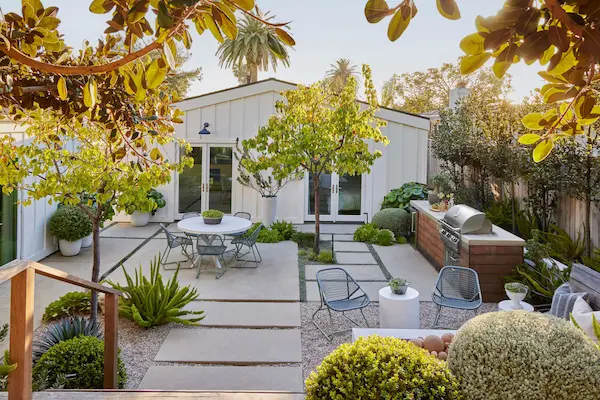
In this popular low maintenance arrangement, a wide outer border frames the yard, while a simple inner “island” or central area stays open and uncluttered.
- Around fences and walls, create a continuous planting strip one to two meters (three to six feet) deep, filled with drought friendly shrubs, ornamental grasses and groundcovers that knit together to form a soft, green frame.
- In the center, keep a simple shape such as an oval or rectangle of lawn, gravel or deck space, which is easy to mow or rake because its boundaries are smooth rather than wavy and complex.
- Place a few accent plants (such as a small ornamental tree or a large feature pot) at visual focal points, like the far corner opposite the door, to draw the eye and give the yard structure without adding maintenance-heavy flower beds.
Layout sketch 2: The “side path and patio” yard
This arrangement works well for smaller backyards or side yards and focuses on creating a clear walking route that doubles as a visual design element.
- Run a simple path made of pavers, stepping stones or crushed gravel from the door to a seating area, barbecue spot or gate, keeping it straight or gently curved so it is easy to shovel, rake or sweep.
- On one side of the path, place most of your planting beds, turning that strip into a drought friendly, low maintenance planting area with layered heights: taller shrubs at the back, medium grasses in the middle and groundcovers at the front.
- On the opposite side, keep surfaces minimal with lawn, mulch or gravel and perhaps a few large containers, so routine care is limited to occasional raking or mowing rather than intricate weeding on both sides.
Layout sketch 3: The “room and view” backyard
For yards with an existing deck or patio close to the house, you can treat that hard surface as a main outdoor room and design the rest of the space to be viewed and enjoyed from that vantage point with minimal upkeep.
- Define the patio or deck as the primary living zone by keeping it clear, adding perhaps a low container herb garden and one or two tough evergreen plants in pots for year-round greenery.
- Beyond the main surface, simplify the view with broad swathes of one or two groundcovers or low grasses rather than many small beds; this creates a calm, visual “carpet” that is easier to maintain.
- Use taller plants such as a few small trees or larger shrubs at the fence line or near corners to frame the scene and provide privacy, making sure they are species suited to your shade, wind and water conditions.
Step 3: Build a drought friendly, low-care plant palette
Choosing plants is often the most fun part of planning, yet it pays to be strict and keep the palette small, because repeating a limited set of reliable plants usually leads to easier care and a more harmonious look than filling beds with dozens of different species.
General plant selection principles for easy landscaping
- Prefer plants described as drought tolerant, low water or suitable for dry conditions in your local climate, and check that their mature size fits your space so you avoid constant pruning.
- Focus on perennials—plants that come back year after year—rather than annuals that need replanting each season, unless you want one or two pots for seasonal color only.
- Look for disease-resistant varieties of shrubs and groundcovers, as these will generally need fewer interventions and stay healthier with minimal attention.
- Whenever possible, choose regionally appropriate or native plants recommended by local sources, since they are more likely to thrive on typical rainfall patterns and local soils.
Sun-loving, drought friendly plant categories
In areas that receive plenty of sunlight, you can build a palette mainly from tough shrubs, ornamental grasses and resilient groundcovers that suit easy landscaping and limited watering.
- Evergreen shrubs: choose compact, slow-growing varieties with tidy shapes; these can anchor borders and require only occasional pruning to keep them neat.
- Ornamental grasses: clumping grasses add movement and texture, often needing just one annual cut-back; select non-invasive species that match your climate.
- Drought tolerant perennials: plants with silvery or narrow leaves often handle dry conditions well and can provide seasonal flowers without demanding constant care.
- Groundcovers for sunny spots: creeping, low-growing plants form living mulch that suppresses weeds and reduces the need for bare soil or high-maintenance lawn.
Shade tolerant and partial shade plant ideas
Shady zones under trees, along high fences or beside buildings can shift from problem areas to calming retreats when filled with the right lower-maintenance plants rather than struggling lawn.
- Shade shrubs: look for species described as suitable for shade or woodland edges, which often keep leaves through the season and need only light pruning to shape.
- Ferns and foliage plants: many fern varieties thrive in shade, creating a soft texture that stays interesting even without flowers.
- Shade groundcovers: low plants that tolerate low light can create a green carpet under trees where grass may always look thin or muddy.
- Hosta-type plants and similar perennials: in mild climates, broad-leaved perennials can fill shade beds with bold shapes and require little beyond seasonal cleanup.
Container-friendly plants for patios and steps
- Use sturdy, drought tolerant shrubs in large pots near doors for structure, choosing varieties that stay compact and do not outgrow containers quickly.
- Mix in a few low-care herbs or ornamental grasses in containers for texture, checking they are suited to the light conditions on the patio.
- Limit the number of different container plant types to reduce watering needs and simplify replacement when a plant ages out or fails.
Step 4: Surfaces and materials that keep work low
Plants may be the most visible part of the garden, yet the surfaces between them—mulch, gravel, pavement and remaining lawn—often determine how much regular effort is needed to keep things looking tidy.
Mulch as a key low maintenance ally
- Apply a layer of organic mulch such as shredded bark, wood chips or composted material around plants in beds, typically 5–8 cm (2–3 inches) deep, as this helps suppress weeds, conserve moisture and regulate soil temperature.
- Keep mulch a small distance away from plant stems and trunk bases to prevent rot, leaving a visible “donut” of clear soil immediately around the plant.
- Plan to top up mulch lightly every year or two as it breaks down, especially in high-traffic or windy areas where it may shift.
Gravel and stone for paths and no-mow areas
- Create simple paths with compacted crushed stone or gravel, bordered with pavers, bricks or metal edging to keep material from spreading into beds.
- Use a weed barrier fabric under new gravel zones only where appropriate and as recommended in your area, combining it with a sufficient layer of stone to limit weedy growth.
- Choose rounded gravel for bare-foot-friendly sitting areas, and angular crushed stone for paths that need better traction.
Reducing lawn to only what you use
- Identify the parts of your lawn that are actually used for play, pets or sitting, versus edges and corners that rarely see activity.
- Convert seldom-used lawn strips into planting beds or mulched zones, reducing mowing time while still leaving a functional grassy area where it adds value.
- In drought-prone regions, consider drought tolerant grass mixes or alternatives such as low-growing groundcovers that need less frequent mowing and water, provided they are appropriate for your climate.
Step 5: Simple irrigation and watering habits for drought friendly yards
Even drought friendly landscapes need some water to establish and to survive extended dry periods, yet clever design and simple technology can cut down dramatically on manual hose-dragging sessions.
Basic watering strategies
- Group plants with similar water needs together in the same beds, so you can water those zones efficiently without overwatering tough plants or starving thirstier ones.
- Water deeply and less often rather than applying small amounts frequently, which encourages roots to grow deeper and helps plants better cope with drought spells.
- Water early in the morning or in the evening when temperatures are cooler, reducing evaporation and minimizing leaf scorch in sunny areas.
Low-tech irrigation helpers
- Attach simple soaker hoses or drip lines to outdoor taps and weave them through planting beds, allowing water to seep slowly into soil at ground level with minimal waste.
- Use mechanical or battery-powered timers on taps so beds receive consistent watering even when you are busy, adjusting run times seasonally.
- Place inexpensive rain gauges in different parts of the yard so you can see how much natural water fell and adjust manual watering accordingly.
Step 6: Maintenance calendar for low maintenance backyard ideas
Even the best designed easy landscaping needs occasional attention, and dividing care into a calendar with small, predictable tasks helps keep your yard looking good without surprise marathons.
Weekly or bi-weekly quick checks (10–20 minutes)
- Walk the yard once or twice a week, glancing at plants for obvious issues such as broken branches, dry containers or new weeds sprouting in paths.
- Pull small weeds by hand before they grow large roots or set seed, focusing on gravel areas, mulched beds and along edges, which are easiest to tidy in quick bursts.
- Check irrigation systems or hoses for leaks and adjust water settings if you see signs of overwatering (mushy soil, yellow leaves) or underwatering (wilting, dry soil).
Monthly tasks
- Trim lightly any shrubs or grasses that have stray branches sticking into paths or seating areas, keeping the general natural shape rather than sculpting tight boxes.
- Top up mulch in thin spots, especially in high-traffic entry beds where kicking and raking may expose soil.
- Brush or blow leaves and debris off patios and paths so surfaces stay safe and visually tidy, preventing weeds from rooting in accumulated organic matter.
- Wipe or rinse outdoor containers and furniture briefly so the main “look” of the yard remains pleasant even if deeper cleaning waits for a different season.
Seasonal or quarterly tasks
- Early spring: cut back ornamental grasses and perennials that were left standing over winter, shape shrubs lightly if needed and inspect decks or fences for any repairs to plan.
- Late spring or early summer: renew mulch broadly, adjust watering as heat increases and add any new plants that will benefit from a full growing season to establish.
- Late summer or early autumn: remove any dead annuals, tidy seedheads if desired, plant hardy perennials or bulbs where appropriate and adjust irrigation downward as days cool.
- Late autumn or early winter: do a final leaf cleanup where necessary, protect vulnerable containers by moving them closer to walls or insulating them, and shut off or winterize irrigation lines as required in your climate.
Bringing these low maintenance backyard ideas together in one simple plan
Designing an attractively low-care yard does not happen in one afternoon, yet when you combine a clear layout, a modest plant palette, drought friendly watering habits and a realistic maintenance calendar, the project becomes a series of manageable steps rather than an overwhelming transformation.
Starting with an honest walk around your yard and a quick sketch of sun, shade and traffic patterns gives you a grounding reality check, from which you can choose a layout model that suits your property shape and family habits, whether that is a framed border with an easy-to-mow center, a side path and patio approach or a simple “room and view” concept around an existing deck.
Once structure is in place, selecting a small group of easy landscaping plants—both sun-lovers and shade-tolerant species—and repeating them in generous clusters helps the yard look cohesive and cuts down on the variety of care tasks, while smart use of mulch, gravel and reduced lawn areas keeps regular chores mostly limited to brief walk-throughs and occasional trims.
Over time, as you follow your maintenance calendar in short, predictable bursts, you are likely to notice that the backyard demands fewer “emergency” days of intense work and instead offers a usable, pleasant and increasingly drought friendly outdoor room that supports your life, your schedule and your budget, which is exactly what low maintenance backyard ideas are meant to achieve.