
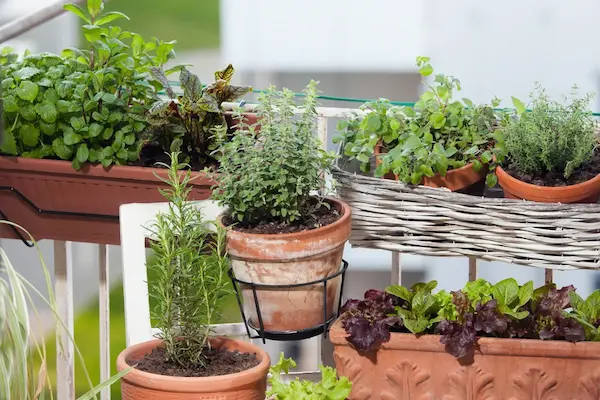
Instead of worrying about complicated landscaping or expensive equipment, you can treat this herb garden as a friendly first project that fits on a railing, a sunny window ledge or a small collection of pots by the door, focusing on a few dependable herbs, simple containers and easy watering habits that match your schedule and the seasons where you live.
This cheerful step-by-step guide will walk through the basics of setting up a balcony herb garden starter from scratch, including how to check your sunlight conditions, which containers work best on a balcony, which herbs are kindest to beginners, how to pot them correctly and what kind of watering schedule keeps them thriving without turning gardening into another stressful chore.
Why a balcony herb garden is the perfect starter project
Beginning gardeners sometimes feel overwhelmed by talk of soil pH, compost ratios and plant diseases, however herbs in containers can be forgiving teachers, because many tolerate small mistakes and bounce back quickly as long as they get enough light, reasonable soil and water that is not overdone.
Practical reasons to start with balcony herbs
- Herbs offer fast feedback, since you can taste the results in your cooking within weeks of planting, which keeps motivation higher than waiting months for big harvests.
- Container gardens can be rearranged easily; if one pot looks unhappy in a certain corner, you can slide it to a sunnier or shadier spot without needing to dig anything up.
- Most common kitchen herbs stay relatively compact, making them well suited to balconies, fire-escape-style platforms (where allowed) and small patios.
- Watering and feeding are simpler to manage in an herb garden than in a large vegetable patch, since each pot is a small, contained world that responds quickly to care.
- Smell and appearance bring joy beyond cooking; brushing past rosemary or lemon balm releases fragrance that can make a small outdoor space feel more alive and seasonal.
Important limits to remember on a balcony
- Containers dry out faster than garden beds, especially in sun and wind, so a balcony herb garden starter needs a bit more watering attention than plants in the ground.
- Weight limits for balconies and railings vary; it is worth choosing lightweight pots and soil mixes rather than very heavy ceramic containers packed with wet soil and stone.
- Sunlight patterns can change during the year, especially if nearby buildings or trees cast different shadows as the sun moves, so occasional adjustments to pot placement keep herbs in their comfort zones.
- Local rules or building associations sometimes have restrictions about dripping water or hanging planters over the street, and checking these early avoids headaches later.
Step 1: Check your sunlight, wind and space before buying plants
Many balcony herb successes and failures come down to light and microclimate, which means taking fifteen minutes to observe your space carefully will save money and give your herbs a much better chance from the start.
How to understand your balcony’s sunlight
- Notice which direction your balcony faces by checking a phone compass or mapping app; for example, south-facing spaces in many regions get the strongest and longest sun, while north-facing areas tend to receive softer, indirect light.
- Look at your balcony at several times of day—early morning, midday, late afternoon—and roughly note how many hours of direct sun hit the railings and floor, not just what you see through the door.
- Identify any major shade-makers such as nearby trees, tall buildings, or balcony roofs above you, because they can significantly reduce usable sunlight even if the direction seems sunny on paper.
- Divide your balcony mentally into zones such as “full sun,” “half shade” and “mostly shade” based on what you observed, and remember these when choosing where to place specific pots for your balcony herb garden starter.
Checking wind and temperature quirks
- Stand on the balcony on a breezy day and notice whether wind funnels through, especially at corners or between buildings; strong wind can dry pots quickly and batter delicate leaves.
- Pay attention to heat build-up on hot afternoons; some balconies, especially those with a lot of concrete or glass, can feel like ovens and may suit tougher herbs better than delicate ones.
- Look for places where warm air from vents or air conditioners blows, making sure pots can be placed far enough away that herbs are not constantly blasted with hot, dry air.
Measuring usable space for pots and containers
- Measure the depth and length of any ledges, floor strips or shelves where you plan to keep containers, noting how wide pots can be without blocking the balcony door or walkway.
- Consider vertical options like wall-mounted shelves or tiered stands, while always respecting safety and weight limits, as these structures can multiply growing space without using extra floor area.
- Decide in advance how many pots you can realistically water and care for regularly; starting with a modest number, perhaps four to eight herbs, is usually better than crowding dozens into a tiny area.
Step 2: Choose containers and potting mix for your balcony herb garden starter
Once you understand where sunlight falls and how much room you truly have, the next step is selecting containers and potting mix that help herbs thrive in a small, elevated environment.
Types of containers that work well for herbs
- Plastic pots and planters: lightweight, affordable, often come with drainage holes and are easy to move around as your balcony herb garden changes through the seasons.
- Fabric grow bags: flexible and breathable, these bags encourage good root aeration and can be folded away when not in use, which is helpful for renters.
- Terracotta or clay pots: classic and attractive, they allow moisture to evaporate through the pot walls, which keeps roots from staying too wet but also means more frequent watering may be needed.
- Window boxes or railing planters: suitable when attached safely and in compliance with building rules, they can hold several herbs together and make harvesting easy from just outside the kitchen door.
- Repurposed containers: clean food-safe buckets or sturdy crates can become planters if holes are drilled carefully in the base for drainage and the container is stable.
Container size and spacing tips
- Select pots at least 15–20 cm (6–8 inches) wide for single herbs like basil, thyme or parsley, since very tiny pots dry out quickly and limit root growth.
- Use larger planters 25–30 cm (10–12 inches) or more across for mixed plantings, such as combining three different herbs that have similar water and light needs.
- Leave a few centimeters between pots so air can move around them, which reduces humidity build-up and helps prevent mildew or fungus on leaves.
- Avoid placing very tall, heavy pots on narrow balcony ledges or unstable stands; instead, put them on the floor or in sturdy corners where they cannot topple.
Potting mix basics for balcony herbs
- Choose a quality potting mix rather than garden soil from the ground, because potting mix is formulated to drain well in containers and is less likely to compact around roots.
- Look for mixes that mention herbs or vegetables on the bag, or that include ingredients like compost, coconut coir, perlite or vermiculite for improved structure.
- Avoid using heavy soil containing a lot of clay, as it can stay waterlogged in pots and cause root rot, especially on shaded or cool balconies.
- Fill containers loosely without packing soil down too hard; a gentle firming with your fingers is enough to support plants while still leaving plenty of air pockets.
Step 3: Choose beginner-friendly herbs for your balcony herb garden starter
Some herbs are more tolerant of imperfect watering and changing conditions than others, making them ideal partners for new gardeners who want satisfying results without a steep learning curve.
Sunny balcony herb choices
Balconies that receive at least five to six hours of direct sunlight most days can support a wide range of Mediterranean-type herbs that love warmth and good light.
- Basil: excellent in warm weather, loves full sun, and rewards regular picking by becoming bushier; well suited for summer balcony herb garden starter pots.
- Rosemary: enjoys bright, dry conditions, and once established can handle a bit of neglect, with needle-like leaves perfect for roasts and potatoes.
- Thyme: low-growing and fragrant, this herb suits shallow containers and requires only moderate watering once it settles in.
- Oregano or marjoram: both offer a pizza-friendly flavor, spread gently in pots and handle strong sun well.
- Sage: with textured, aromatic leaves, this herb prefers sun and does not like constantly wet roots, making it a good match for well-drained balconies.
Herbs for partial shade or softer light
Spaces that get morning sun and afternoon shade, or bright indirect light without harsh midday sun, are still excellent for several kitchen staples that prefer not to bake all day.
- Parsley: grows happily in partial sun, tolerates cooler conditions and provides steady harvests of fresh leaves for garnishes and salads.
- Chives: resilient and compact, they produce onion-flavored leaves and purple flowers, working well in pots near doors and windows.
- Mint: vigorous and forgiving, best grown in its own container to prevent it from spreading aggressively into neighbors, and useful in drinks, sauces and desserts.
- Cilantro (coriander leaves): prefers cooler weather and partial shade, often thriving in spring and autumn rather than the hottest midsummer periods.
- Lemon balm: aromatic and gentle, this herb brings a lemony scent to teas and desserts and usually handles some shade or dappled light.
Seasonal suggestions by climate
- In spring, focus on cilantro, parsley, chives and early-season basil once frost risk passes, because they enjoy the milder temperatures.
- During summer, lean on sun lovers such as basil, thyme, oregano and rosemary, which relish warm conditions and longer days.
- In autumn, sow another round of parsley and cilantro if temperatures are moderate, and continue harvesting perennial herbs like thyme and rosemary as long as they look healthy.
- For mild winters, some balconies can host hardy herbs like rosemary, thyme and sage year-round, especially if pots are protected from strong winds and soaked soils.
Step 4: Potting guide for your balcony herb garden starter
Transferring herbs into their balcony containers is a satisfying moment, and doing it carefully gives them a strong start, whether you buy small plants from a garden center or begin with seeds.
Planting herbs from small starter plants
- Fill each container with potting mix up to a few centimeters below the rim, then water lightly to settle the soil so you do not plant into completely dry mix.
- Squeeze the sides of the nursery pot gently or tap the base to release the herb, supporting the base of the plant with your hand as you slide it out.
- Inspect the roots; if they are tightly circling the pot, tease them loosen slightly with your fingers so they can spread into the new soil more easily.
- Dig a hole in the container so the plant can sit at the same depth it grew in the nursery pot, avoiding burying the stem deeper than it was originally.
- Backfill around the plant with potting mix, gently pressing to remove air pockets but not compressing the soil too firmly, and leave a small rim at the top so water does not immediately spill over.
- Water thoroughly until excess water begins to drain from the bottom, which ensures the root ball and surrounding soil are well-moistened and helps the plant settle in.
- Place the pot in its intended balcony zone (sun or shade) and avoid fertilizing for the first week so roots can adjust before extra nutrients encourage fast new growth.
Sowing herbs from seed in containers
- Fill a shallow tray or small pot with fine-textured potting mix and water lightly before sowing, because moist soil helps tiny seeds stay in place.
- Sprinkle seeds thinly on the surface, following packet guidance for spacing, and cover lightly with a very thin layer of mix or vermiculite if recommended.
- Label the pot with the herb name and sowing date so you remember what is planted where, especially when several pots look similar at first.
- Place seed pots in a bright but not scorching location, keeping the mix consistently lightly moist until seedlings appear; avoid waterlogging by using a gentle spray or small watering can.
- Thin seedlings gradually as they grow, removing weaker plants so remaining ones have adequate space for roots and leaves.
Step 5: Watering schedule and basic care for balcony herbs
Balcony containers dry at different rates depending on sun, wind, pot size and plant type, so a flexible watering schedule works better than rigid rules, yet you can still take a structured approach that keeps your herbs happy without constant worry.
How to tell when to water
- Use the finger test by inserting a fingertip into the soil about 2–3 cm deep; if it feels dry at that depth, it is usually time to water, whereas if it still feels cool and slightly damp, you can usually wait.
- Watch plant posture: herbs that droop lightly in the afternoon and perk up by evening when the sun softens may simply be responding to heat, while constant drooping even in cooler times suggests they need water.
- Lift small pots occasionally to get a sense of weight; dry containers feel noticeably lighter than freshly watered ones, and this habit helps you judge moisture quickly on busy days.
Sample watering schedule by season and weather
- Cool spring or autumn: check pots every two to three days, watering when the top few centimeters of soil feel dry, since cooler air slows evaporation.
- Warm, mild summer days: inspect daily, especially for smaller containers, and expect to water most herbs every one to two days depending on wind and exposure.
- Very hot or windy spells: check morning and evening; some pots may need water twice in a day if they are small or in full sun, while larger containers might hold moisture a bit longer.
- Rainy periods: reduce manual watering, and if balcony roofs or overhangs prevent pots from receiving rain, treat them individually based on soil feel rather than the weather forecast alone.
Good watering technique for balcony containers
- Water at the base of plants rather than over the leaves where possible, which reduces the risk of fungal issues and ensures more moisture reaches the root zone.
- Allow water to soak in deeply until some drains from the pot’s base, instead of giving only small sips that wet just the surface, because shallow watering encourages shallow roots.
- Avoid leaving pots standing in trays of stagnant water for long periods, as constantly wet roots can develop rot; empty saucers after the initial soak if they remain full.
- Water early in the day or in the evening when temperatures are lower, especially during very hot spells, so plants can take up moisture before midday sun hits.
Feeding and harvesting tips
- Use a balanced, water-soluble fertilizer labeled for container edibles at a diluted rate every few weeks during the main growing season, following package instructions for herbs or vegetables.
- Avoid overfeeding herbs like basil and mint, as extremely rich soil and excessive nitrogen can lead to lush growth that is less flavorful; moderate feeding usually gives better taste.
- Harvest regularly by pinching or cutting stems above a pair of leaves, which encourages bushier growth and prevents herbs from becoming too tall and sparse.
- Remove flower buds on basil and many leafy herbs when they first appear if your main goal is leaves, since flowering can signal plants to slow leaf production and change flavor.
Step 6: Simple seasonal routine for your balcony herb garden starter
Herb care changes with the seasons, and having a small seasonal checklist keeps your balcony garden feeling fresh and productive from early spring through cooler months.
Spring tasks
- Refresh potting mix in containers that held herbs the previous year, removing old roots and topping up with fresh mix and compost if available.
- Prune overwintered herbs like thyme or rosemary lightly, cutting back dead or woody tips to encourage new shoots once temperatures rise.
- Start cool-friendly herbs such as parsley, chives and cilantro, and sow early basil indoors or in a sheltered spot after frost risk passes.
Summer habits
- Increase watering checks as temperatures climb, and consider grouping pots so that herbs with similar needs sit together and can be watered more efficiently.
- Provide light shade for delicate herbs during extreme heat waves by moving pots slightly or using temporary shade cloth if sun becomes intense.
- Harvest generously, drying or freezing surplus leaves so plants stay compact and have energy to produce more growth through the season.
Autumn and cooler weather care
- Reduce feeding as days shorten, allowing herbs to slow growth naturally while you continue harvesting at a gentler pace.
- Trim annual herbs like basil for final harvests before cold nights arrive, preserving leaves in pesto, oil or ice cube trays for winter cooking.
- Protect hardy herbs in cooler climates by moving pots closer to walls or under shelter to moderate temperature swings and heavy rain.
Winter options for mild or cold climates
- In mild climates, keep perennial herbs like rosemary, thyme and sage outdoors, checking soil periodically and watering sparingly when conditions are dry but above freezing.
- In colder regions, move some pots indoors to bright windowsills for a temporary indoor herb garden, trimming plants to fit and reducing watering as growth slows.
- Clean and store empty containers, removing old soil and washing pots so they are ready for fresh potting mix when spring planting begins again.
Troubleshooting common balcony herb garden problems
Even with good planning, herbs occasionally look unhappy, and knowing a few quick interpretations of their signals helps you correct issues before plants decline too far.
Yellowing leaves
- If lower leaves on herbs turn yellow while soil feels wet, overwatering may be the culprit; allow the top layer to dry more between waterings and check that drainage holes are not blocked.
- When new leaves appear pale or yellowish, moderate feeding with a balanced fertilizer may help if it has been a long time since fresh nutrients were added.
Leggy, stretched stems
- Stems that stretch long with few leaves usually indicate insufficient light, so moving pots to a sunnier spot or choosing more shade-tolerant herbs for that location can help.
- Regular pinching and harvesting encourages bushier growth and can mitigate some legginess if light is adequate but harvests have been very minimal.
Dry, crispy edges or scorched spots
- Crisped leaf edges can result from sudden hot sun, especially after a period of cooler, shadier weather, so gradually introducing herbs to brighter conditions is gentler.
- Wind can dry out leaf edges quickly; placing a windbreak such as a taller pot or a small screen near delicate herbs softens gusts without blocking all light.
Pests on balcony herbs
- Check leaves regularly, including undersides, for small insects or sticky residue, which may signal aphids, whiteflies or other pests.
- Rinse affected plants with a gentle stream of water to dislodge many pests, and if needed use mild, plant-safe soap sprays according to package instructions for edible herbs.
- Isolate heavily affected pots briefly so pests do not spread quickly to neighboring herbs while you are treating the problem.
Quick reference checklists for your balcony herb garden starter
Having small checklists on a fridge or inside a balcony door helps you care for herbs in quick moments, especially when life feels busy and you want gardening to stay light and enjoyable.
Starter herb shopping list
- Two to three sun-loving herbs (basil, thyme, oregano, rosemary, sage), chosen according to your balcony light and cooking preferences.
- Two to three partial-shade herbs (parsley, chives, mint, cilantro, lemon balm) to balance your collection and suit spots with softer light.
- Containers in suitable sizes with drainage holes, ideally lightweight and appropriate for your balcony weight limits.
- Quality potting mix formulated for containers and, if desired, a mild fertilizer suitable for edible plants.
- Small watering can or hose attachment with a gentle spray, plus a pair of scissors or pruners reserved for herb harvesting.
Weekly care checklist
- Check moisture in every pot at least two or three times, adjusting watering based on the finger test and weather conditions.
- Harvest a few stems from each healthy herb, pinching above leaves to encourage fresh growth and carrying the harvest straight into the kitchen.
- Look for pest signs or damaged leaves, removing any affected foliage and treating gently if needed.
- Rotate pots a quarter turn if plants lean toward the light, helping them grow more evenly and look fuller.
- Feed lightly with diluted fertilizer during the main growing season, following the schedule on your chosen product if plants seem to need a nutrient boost.