
When you live in an apartment and guests are on the way, the kitchen often feels like the most stressful room to deal with, because it holds dishes, crumbs, grease, smells, recycling and random items that seem to multiply whenever you are busy or tired.
Without a clear structure, a deep clean can quickly turn into wandering from cabinet to cabinet, starting five tasks at once and finishing none of them, which usually leads to frustration, sore feet and a room that still looks half done just as your guests are almost at the door.
A simple kitchen deep clean plan changes that by breaking the room into zones, giving each zone a focused checklist and assigning realistic time blocks, so you always know exactly where to start, what to do next and when it is good enough to move on.
This guide is systematic, clear and product agnostic, meaning it does not depend on any specific brand, only on categories of cleaners and safe mixes, and it is designed for apartment dwellers who want the kitchen to feel fresh and ready for company without spending an entire day scrubbing.
By the end of the article you will have a zone by zone plan, a set of safe, simple cleaning mixes, a time blocked schedule that fits into roughly two to three hours and a printable checklist that you can reuse whenever a deeper reset is needed.
How to use this simple kitchen deep clean plan
Before touching a sponge or mop, it helps to understand how this plan is laid out, because a little orientation makes the work feel lighter and keeps you from getting stuck in one spot for too long.
Key ideas behind the plan
- Work in zones so that you can finish one small area and feel progress before moving on.
- Use time blocks to keep perfectionism in check and to ensure you finish the whole room instead of polishing one corner for an hour.
- Rely on simple, safe cleaning mixes and basic tools, keeping products neutral and widely available.
- Move from top to bottom and from cleanest to dirtiest tasks, so you are not redoing work.
- End with visible finishing touches that make the whole kitchen feel guest ready.
What you will need (product-agnostic list)
- Soft sponges or non-scratch scrub pads.
- Microfiber cloths or clean rags for wiping and polishing.
- A small bucket or bowl for mixing cleaning solutions.
- Dishwashing liquid (mild, non-abrasive).
- All-purpose neutral cleaner or a small amount of diluted vinegar solution for suitable surfaces.
- Baking soda for mild abrasion on safe surfaces (not on delicate stone or easily scratched finishes).
- A degreasing cleaner or warm soapy water for heavy grease, depending on your preference.
- A broom or vacuum for crumbs and dust, plus a mop or floor cloth.
- Trash bags and recycling containers.
- Gloves, if your skin is sensitive or you are using stronger products.
Once tools and materials are ready, you can follow the time blocked outline and move through each zone without stopping to search for supplies or wonder what to do next.
Safety first: safe mixes and combinations to avoid
Cleaning should leave the kitchen fresher and safer, not expose you to unnecessary fumes or reactions, so a few basic safety guidelines and simple mixes are worth reviewing before you start.
Safe, simple mixes for general kitchen cleaning
- Warm water plus a small amount of dish soap: gentle on most surfaces, effective for everyday grease and food residue, and easy to rinse off.
- Diluted vinegar solution for suitable surfaces: a mixture of water with a modest splash of plain vinegar can help with mineral spots and light degreasing on many hard surfaces, but should not be used on natural stone like marble, some granites or certain delicate finishes.
- Baking soda paste for spot cleaning: baking soda combined with just enough water to form a paste can help lift stuck-on food or mild stains on many sinks, ovens and pans, as long as the surface is not easily scratched by a gentle abrasive.
- Neutral all-purpose cleaner: used according to label directions, this can handle counters, cabinet fronts and many appliance exteriors without requiring multiple specialised products.
Important combinations you should avoid
- Never mix bleach with ammonia-based products, strong acids such as vinegar or other cleaners, because doing so can create dangerous gases.
- Do not combine hydrogen peroxide and vinegar in the same container, since the reaction can create irritating chemicals and is not necessary for effective home cleaning.
- Avoid mixing multiple drain or oven cleaners, as they are usually designed to work alone and combining them can produce hazardous reactions.
- Use only one strong product on a surface at a time, rinsing or wiping thoroughly before trying a different one.
General safety tips
- Read and follow instructions on any product labels, especially regarding ventilation, contact time and safe surfaces.
- Open windows or turn on an extractor fan when using stronger cleaners, particularly in smaller apartment kitchens.
- Wear gloves if products dry or irritate your skin, and avoid splashing near eyes or face.
- Test new cleaners or mixtures on a small, inconspicuous area before using them on large or visible surfaces.
- Store chemical products out of reach of children and pets, and never pour them into food or drink containers.
With these simple precautions and product-agnostic guidelines, you can use the deep clean plan confidently while avoiding unnecessary risks.
Time-blocked overview: a two-to-three-hour simple kitchen deep clean plan
The total time will vary based on kitchen size and how long it has been since the last deeper clean, yet many apartment kitchens can be thoroughly refreshed in about two to three hours by following these structured blocks.
| Time Block | Duration | Zone Focus | Main Goals |
|---|---|---|---|
| Block 1 | 20–30 minutes | Reset surfaces and dishes | Clear clutter, run dishwasher or wash dishes, empty trash |
| Block 2 | 25–35 minutes | Counters, sink and splash zones | Degrease, disinfect as needed, polish sink |
| Block 3 | 30–40 minutes | Stove, oven exterior and microwave | Remove baked-on spills, degrease control areas |
| Block 4 | 25–35 minutes | Fridge exterior and quick interior reset | Wipe doors, handles, clear old food, clean key shelves |
| Block 5 | 20–30 minutes | Cabinet fronts, handles and small appliances | Remove fingerprints, crumbs and light grease |
| Block 6 | 20–30 minutes | Floors and final touches | Sweep or vacuum, mop, set guest-ready details |
You can complete all blocks in one session, or split the plan across two days, for example doing Blocks 1–3 one evening and Blocks 4–6 the next, depending on your schedule and energy.
Block 1: reset surfaces and dishes for a clean starting point
Cleaning a kitchen that is covered in dishes and clutter feels discouraging, so the first time block focuses entirely on making the space workable by removing visual noise and getting dishes out of the way.
Checklist for Block 1
- Collect all dirty dishes, glasses and cutlery from counters, table and other rooms and place them near the sink or dishwasher.
- Start the dishwasher on an appropriate cycle, or fill the sink with warm soapy water and soak the largest or dirtiest items first.
- While dishes soak or run, remove trash and recycling from counters and floors, placing it into bags or bins for later disposal.
- Put away obvious out-of-place items, such as mail, chargers, keys, non-kitchen tools and stray decor, returning each category to its home or a holding box.
- Stack drying racks or clean items neatly so they occupy as little counter space as possible.
Once surfaces are mostly clear and dishes are processing, the room already looks significantly better, which can be very motivating before you tackle deeper degreasing tasks.
Block 2: counters, sink and backsplash – the main work surfaces
Now that counters are mostly visible, this block focuses on the areas where food is prepared and water is used, because these surfaces make the biggest impression on both you and your guests.
Step-by-step for counters and sink
- Remove any remaining small items from counters, such as canisters, spice jars or appliances, and place them on a nearby table or temporarily grouped on one clear section.
- Use a dry cloth or small vacuum attachment to collect crumbs and loose debris from all counter surfaces and the backsplash area.
- Prepare a cleaning solution using warm water and a small amount of dish soap or neutral cleaner, adjusted to suit your surface type.
- Wipe counters in sections, moving from the cleanest areas toward the messier cooking zones, rinsing the cloth frequently in the bucket and changing water when it looks dirty.
- For greasy spots, apply a bit of degreasing cleaner or a slightly stronger soapy solution, letting it sit briefly before wiping, and avoid harsh scrubbing on delicate materials.
- Rinse counters with a cloth dampened in clean water to remove soap residue, then dry with a microfiber cloth to reduce streaks.
- Clean the sink by rinsing food bits away, sprinkling a light layer of baking soda on safe surfaces if needed, and scrubbing with a damp sponge before rinsing thoroughly; finish by wiping faucet and handles until they feel smooth and look shiny.
Backsplash attention
- For tiled or washable backsplashes, wipe from top to bottom with your chosen mild cleaner, paying extra attention to the area directly behind the stove and sink.
- Use a small brush or cloth corner to reach grout lines or tight edges if grease has settled there.
- Dry surfaces with a cloth to prevent water marks, especially if your backsplash includes glossy or metallic finishes.
At the end of this block, the kitchen’s main visual field usually looks much calmer, making the remaining tasks feel more manageable.
Block 3: stove, oven exterior and microwave – degrease and detail
The cooking zone gathers the heaviest grease and splatters, so dedicating a full time block to the stove, oven exterior and microwave ensures that heat, spills and fingerprints are handled thoroughly and safely.
Stove top cleaning sequence
- Turn off all burners and ensure every surface is cool before you begin.
- Remove grates, burner covers or removable pieces and soak them in warm soapy water while you work on the stove surface.
- Wipe loose crumbs and debris from the stove top with a dry cloth or paper towel.
- Apply a degreasing cleaner or warm soapy solution to the stove surface, allowing it to sit for a few minutes on stubborn spots.
- Use a non-scratch sponge to gently loosen spills and grease, taking care not to damage coatings or glass.
- Rinse with a clean, damp cloth, then dry and polish with a microfiber cloth for a smooth finish.
- Scrub soaked grates and burner parts, rinse well and dry before placing them back on the stove.
Oven exterior and control panel
- Wipe handles and knobs with a mild cleaner or soapy water, paying attention to fingerprints and grease near frequently touched areas.
- For glass oven doors, use a soft cloth and non abrasive cleaner, or a simple mixture of water and dish soap, avoiding harsh abrasives that can scratch.
- Dry surfaces thoroughly to prevent streaks and leave a clean, welcoming look.
Microwave interior and exterior
- Remove the turntable and any removable trays, washing them in the sink with warm soapy water and setting aside to dry.
- Place a microwave safe bowl filled with water and a slice of lemon or a small amount of vinegar if appropriate, then heat for a minute or two until steam forms.
- Let the bowl sit briefly inside with the door closed to loosen dried-on splatters using the steam.
- Wipe the interior with a damp cloth, focusing on ceiling and corners where splatters accumulate.
- Clean the exterior door, handle and control panel with a mild solution on a cloth, avoiding excessive moisture around electronic components.
- Return the dry turntable and trays to the microwave.
Once this cooking zone is clean and degreased, the kitchen feels significantly fresher, and the heaviest tasks are already behind you.
Block 4: fridge exterior and a quick interior reset
The refrigerator is a large visual anchor in most apartment kitchens, and even a modest amount of attention can dramatically improve both its appearance and its aroma when guests open the door.
Exterior wipe-down
- Clear magnets and papers temporarily or straighten them if you prefer to keep them, discarding outdated notes or flyers.
- Clean handles and frequently touched areas with warm soapy water or a suitable all-purpose cleaner, as these spots often harbour prints and smudges.
- Wipe doors from top to bottom, following the grain if your fridge has a brushed metal finish, then dry with a microfiber cloth.
Interior quick reset
- Remove obvious old food, expired items and empty containers, placing them in trash or recycling as appropriate.
- Choose one or two main shelves and the door compartments that guests are most likely to see, rather than emptying the entire fridge if time is short.
- Take items off these shelves, grouping them by type on a countertop or table.
- Wipe shelf surfaces with a mild cleaner or warm soapy water, then dry thoroughly before replacing food.
- Place items back in a more organised way, spreading jars out slightly and grouping beverages, condiments and leftovers logically.
- If time remains, repeat the wipe and organise steps on one drawer or additional shelf.
Even a quick interior reset like this reduces smells, frees up space and makes opening the fridge in front of guests feel less stressful.
Block 5: cabinet fronts, handles and small appliances
Cabinet doors, drawer fronts and small appliances often gather a fine layer of grease, dust and fingerprints that you stop noticing daily, yet guests tend to see them at eye level, so this block focuses on these details.
Cabinet and drawer fronts
- Prepare a mild cleaning solution appropriate for your cabinet material, usually warm water with a small amount of dish soap or neutral cleaner.
- Starting from the upper cabinets, wipe doors and handles with a damp cloth, paying particular attention to edges near the stove where grease accumulates.
- Work in sections, drying each door with a separate cloth to prevent streaks or moisture marks.
- Continue with lower cabinets and drawers, wiping fronts and hardware, then drying them as you go.
Small appliance exteriors
- Focus on the appliances that stay on the counter, such as toasters, coffee makers, kettles or blenders.
- Unplug each appliance before cleaning, where possible, for safety.
- Wipe exterior surfaces with a damp cloth and mild cleaner, removing crumbs from toaster trays or base plates where accessible.
- Dry each appliance and coil cords neatly, placing them back in a tidy, aligned way to keep counters looking organised.
Finishing this block leaves cabinets and appliances looking consistently clean, which gives the whole room a more polished feel.
Block 6: floor, finishing touches and guest-ready details
The final block pulls everything together by removing remaining debris from the floor, adding a light shine and taking care of small details that guests notice, such as towels, scents and clutter levels.
Floor cleaning sequence
- Move lightweight furniture or trash cans away from the main floor area to access the edges and corners more easily.
- Sweep or vacuum the floor thoroughly, including under the front edge of cabinets and around the base of appliances where crumbs and dust collect.
- Prepare a suitable floor cleaning solution, based on your flooring type, using warm water and a mild cleaner as recommended.
- Mop the floor starting from the furthest corner and working toward the exit, rinsing the mop frequently and changing water when it becomes cloudy.
- Allow the floor to dry completely before moving furniture and items back, to avoid footprints and slips.
Finishing touches for guests
- Hang a clean hand towel and, if you use them, a fresh dish towel in an obvious, easy-to-reach spot.
- Empty trash and recycling, adding a new liner to bins so they look and smell clean.
- Place a small, non overpowering natural scent if you like, such as a bowl of citrus or a lightly scented candle you can supervise.
- Clear the table or breakfast bar, leaving only simple decor, such as a small plant, bowl or neatly stacked placemats.
- Do a slow visual scan at eye level, checking for stray smudges on doors, handles or glass that you may have missed.
With the floor clean and finishing touches in place, your kitchen should feel ready to welcome guests, and you will be able to relax and enjoy your time with them more easily.
Printable simple kitchen deep clean checklist (summary)
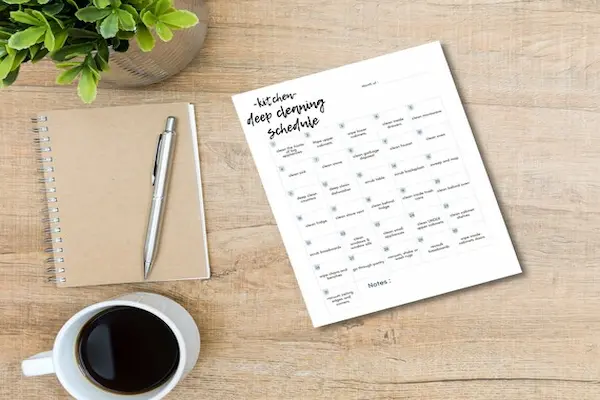
For quick reference and easy reuse, the summary checklist below brings together the main tasks from each time block, so you can print it and keep it in a drawer or on the inside of a cabinet door.
| Block | Zone | Key Tasks | Done? |
|---|---|---|---|
| 1 | Reset & Dishes |
|
|
| 2 | Counters & Sink |
|
|
| 3 | Stove & Microwave |
|
|
| 4 | Fridge |
|
|
| 5 | Cabinets & Small Appliances |
|
|
| 6 | Floor & Finishing |
|
Using this printable checklist alongside the time-blocked plan gives you a repeatable structure for each future deep clean, whether guests are arriving or you simply want your kitchen to feel like a calmer, cleaner part of your home.
Safe-use notes and gentle disclaimer
The suggestions in this simple kitchen deep clean plan are general guidelines intended for typical household kitchens and common surface types; they do not replace instructions that come with your appliances, countertops or cleaning products, and those manufacturer directions should always be followed first when there is any conflict or uncertainty.
Cleaning agents and mixtures can behave differently on specific materials, so testing new solutions on a small, hidden spot remains a wise step, especially on natural stone, delicate metals or special coatings; if you are unsure about a particular surface, reaching out to the manufacturer or a local professional is safer than guessing.
Strong chemical reactions between cleaning products can be hazardous, particularly when bleach, ammonia, strong acids or other concentrated chemicals are involved, so the safest approach is to use one such product at a time, rinse well and ensure good ventilation rather than combining multiple potent products.
This article does not recommend any particular brand or formula and assumes that you will read labels, store products safely, keep them away from children and pets and avoid using food or drink containers for storage of cleaning solutions; by doing so, you can reduce risk while still enjoying a refreshed, guest ready kitchen created by a clear, zone by zone deep clean plan.